

“I feel broken” can be a way of describing grief, exhaustion, rejection or pain that is difficult to put into words. It does not establish that you are defective or that you need to fall apart before you deserve care. You can start with what would help you get through the next part of the day.
You do not need a complete explanation for how you feel. If you are thinking about suicide, have seriously harmed yourself or feel unable to stay safe, seek urgent help from your local emergency or crisis service now. If it is safe and possible, tell someone you trust and ask them to stay with you while you get help.
On this page
Begin with the next manageable need
Choose one thing that would make the next few minutes more workable: a drink, something to eat, a quieter place or help with an immediate responsibility. If even a small task feels too much, ask someone to help with that task rather than treating it as another test of strength.
Put off a non-urgent demand if you can. If someone depends on you, arrange safe cover or practical assistance before stepping away. Limited money, energy or access can make care harder; those barriers deserve attention too.
Use words that leave room for care
You might say “I am grieving,” “I feel overwhelmed” or simply “I am having a very difficult day.” These descriptions can make a request clearer without turning a feeling into a verdict about your whole life.
There may be a clear event behind the feeling, several pressures at once or no obvious reason. The NHS guide to low mood describes how mood can be affected in different ways and encourages seeking support when it is distressing or affects daily life. You do not have to find a hidden personal failure first.
Ask for a particular kind of support
Choose someone who is safe to contact. Your request could be small and specific: “Could you listen for ten minutes?”, “Can you help me arrange an appointment?” or “Would you sit with me while I eat something?” You can say whether you want company, information or practical help.
If the first person is unavailable or responds poorly, that does not mean your needs are unreasonable. Consider another trusted person, a qualified healthcare professional or a relevant local support service. You do not have to share the full story with everyone.
Lower the pressure to feel better immediately
You can have a pleasant moment and still be hurting. You can also have a difficult day after a steadier one without treating it as proof that you have lost all progress. Avoid setting a deadline for grief or demanding constant gratitude from yourself.
Choose a familiar activity only if it feels manageable. Rest, ordinary company or a brief pause can be enough for now. Finding Moments of Calm: Support for Difficult Days offers options you can adapt without requiring yourself to be positive.
Seek help for persistent or intense distress
Speak with a qualified healthcare professional if low mood persists, feels overwhelming or interferes with sleep, eating, work, relationships or everyday care. Seek help sooner if you are concerned; you do not need to wait for a particular number of bad days.
The NHS overview of depression explains that depression is a health condition, not a weakness, and that treatment and support are available. A professional can help you consider what is happening and what care might fit your circumstances.
Let the next step stay small
For today, you might send one message, make one appointment or accept help with one meal. You can revise the plan if your needs change. You are allowed to receive care while you are still uncertain about the future.
If someone you care about feels this way, listen without demanding a hopeful answer. Offer concrete help and take safety concerns seriously. Support is more useful when it responds to what the person needs rather than asking them to perform recovery.
Read the infographic in text
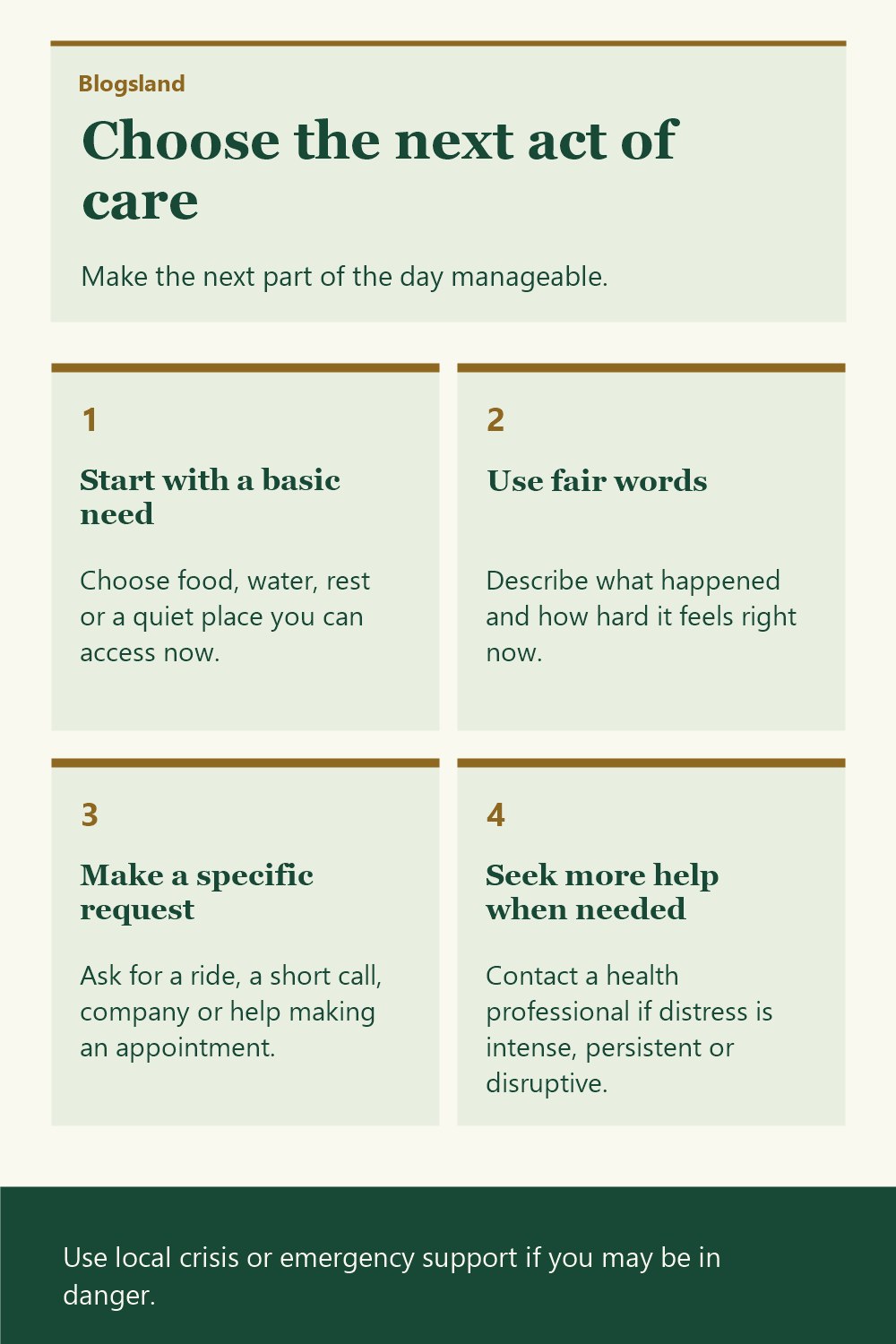
Choose the next act of care Make the next part of the day manageable.
- Start with a basic need Choose food, water, rest or a quiet place you can access now.
- Use fair words Describe what happened and how hard it feels right now.
- Make a specific request Ask for a ride, a short call, company or help making an appointment.
- Seek more help when needed Contact a health professional if distress is intense, persistent or disruptive.
Use local crisis or emergency support if you may be in danger.