

When you encounter hate, intimidation or threats, trying to explain a person’s character may be less useful than deciding what support and protection are needed. A Five Elements personality label is not a sound basis for deciding whether a person will commit violence.
Focus on observable behaviour and the circumstances in front of you. You do not need to identify someone’s personality type, argue them into agreement or handle a threatening situation alone before asking for help.
In this article
1. Attend to immediate safety
If there is immediate danger, seek emergency help appropriate to your location. Move towards a safer place if you can do so without increasing risk. You do not have to remain nearby to finish an argument, collect a recording or prove what has happened.
If you witness an incident, consider what help you can safely get. That may mean alerting staff, contacting emergency services or staying with the affected person afterwards if they welcome it. Avoid actions that could put them or you at further risk.

2. Describe behaviour rather than a personality label
Record what was said or done: a threat, repeated harassment, damage to property or unwanted contact. Distinguish what you observed directly from what you inferred or heard from someone else.
Being quiet, outgoing, ambitious or interested in a particular belief system does not by itself tell you how someone will behave. Personality frameworks may offer language for personal reflection, but they should not be used to excuse threats, stereotype a group or dismiss a report of harm.
3. Understand the term hate crime
In the United States, the Department of Justice explains a hate crime as a crime motivated by bias against characteristics protected by the relevant law. The legal meaning concerns bias, not simply feeling angry or disliking someone.
The distinction matters: not every offensive belief or hateful incident meets the legal definition of a crime. That does not mean an incident is harmless or that support is unavailable. Laws and reporting routes differ by location, so use information relevant to where the incident occurred.
4. Keep useful information when safe
When it is safe, make a factual note of the time, place, what happened and any witnesses. Preserve existing messages or other records that may help you explain the incident. Keep original material where possible rather than relying only on a retelling.
Do not risk another encounter to obtain evidence or publish someone else’s private details. Ask an appropriate support service or reporting organisation how to share relevant information safely. If you are helping someone else, ask before distributing their account or identifying them publicly.
5. Find reporting and support options
For a suspected hate crime in the United States, the Department of Justice’s reporting guidance describes contacting local law enforcement and following up with the FBI. Its page also explains reporting hate incidents to the Civil Rights Division and finding victim-support resources.
You can read the available routes or seek help understanding them without first deciding the final legal classification yourself. An incident at work, school, in housing or on an online service may also have a relevant reporting process. Those processes vary; keep a copy of what you submit and any response.
Ask what support is available for practical needs, such as a safer route, someone to accompany you or help understanding the next stage. Reporting is not a guarantee of a particular outcome, and the person affected may need support beyond the report itself.
6. Support someone without taking over
Listen to what the person wants to share and ask what would help. A specific offer can be easier to answer than a broad promise: “Would you like company while you contact someone?” Respect their privacy and choices while taking immediate danger seriously.
You do not need to make them defend their reaction, retell the incident repeatedly or reassure everyone else. Follow through on help you have agreed to provide, and recognise when the situation needs expertise beyond what you can offer.
Put safety first and describe what happened
If a threatening message includes a slur, focus first on whether you or someone else is in immediate danger. If it’s safe, keep the original message, the time it arrived and any information already available about the account. Avoid contacting the sender to gather more evidence.
Ask local victim-support services or the appropriate authority how to report the incident and how they handle private details. In the United States, the Justice Department explains how to report a suspected hate crime. Other locations may use different procedures.
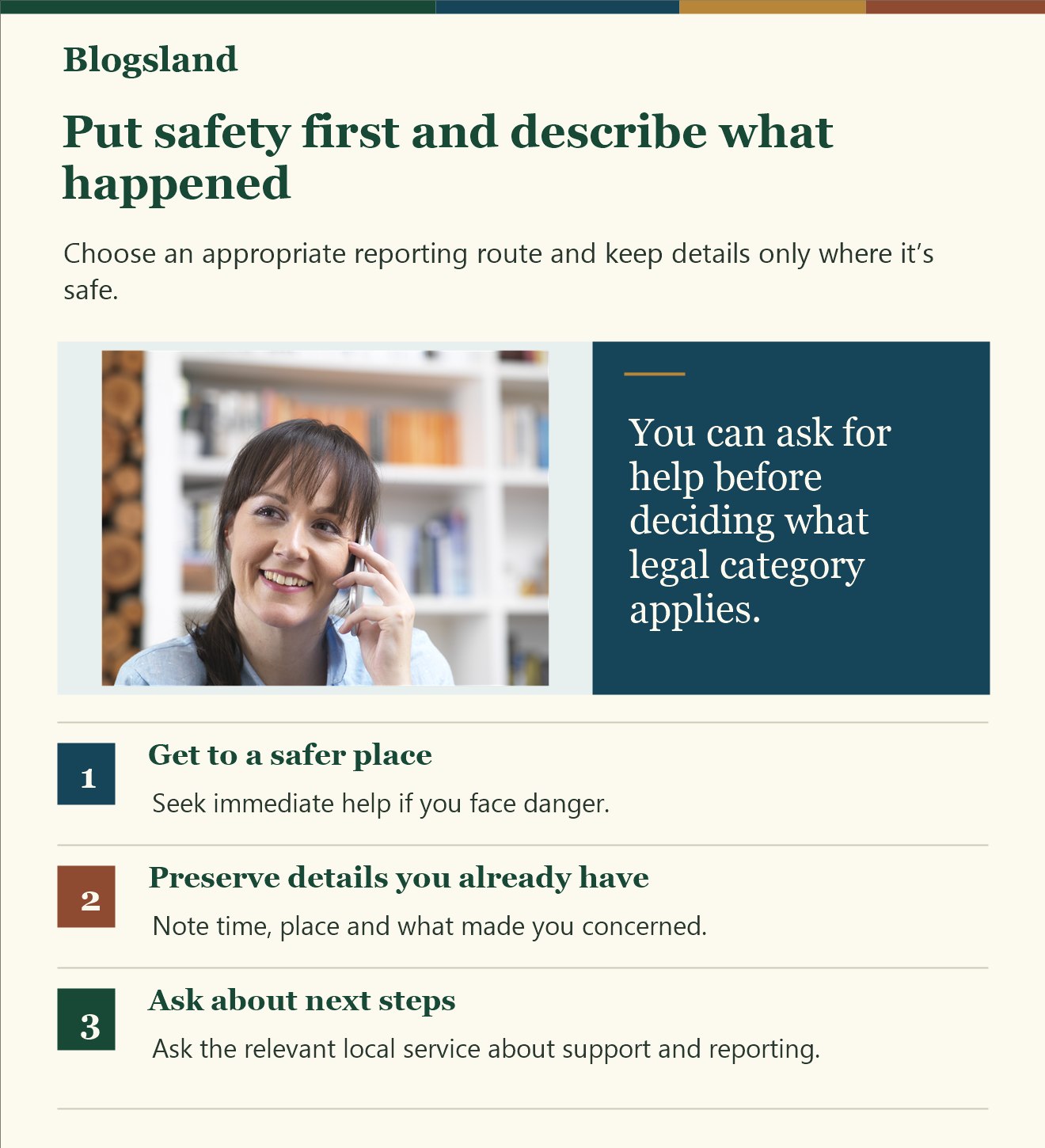
Read the infographic in text
Put safety first and describe what happened
Choose an appropriate reporting route and keep details only where it’s safe.
- Get to a safer place Seek immediate help if you face danger.
- Preserve details you already have Note time, place and what made you concerned.
- Ask about next steps Ask the relevant local service about support and reporting.
You can ask for help before deciding what legal category applies.
Frequently asked questions
1. Who should I contact if a threat is immediate?
Move to safety if you can and contact local emergency services as soon as it is safe to do so. Ask for help before trying to save records or contact the person making the threat.
2. What if I am not sure that it meets the definition of a hate crime?
You can report the facts or ask a local victim-support or law-enforcement service what options apply. Describe the behavior and any apparent bias without needing to settle the legal term yourself.
3. What details may help if I can keep them safely?
Note when and where it happened, what was said or done and whether anyone else saw it. Keep original messages or screenshots if doing so is safe, and ask what the reporting service needs.
4. Can I report an incident I witnessed?
You can ask the appropriate local service how to report what you saw. If someone else was affected, respect their privacy and wishes where possible, and check what support they want.
5. Can I report a threatening post to the platform as well?
A platform report may help with a post or account. If there is a credible threat or risk of harm, consider the appropriate local reporting route separately. Seek urgent help when there is immediate danger.