

A thought such as “I hate myself” can feel convincing when it keeps returning. You may notice it after a mistake, during a difficult relationship or without a clear trigger. Having the thought does not establish that it is true, and you do not have to manage it alone.
Start by making room for support and a more specific description of what is happening. You do not need to turn self-criticism into confidence in one sitting.
On this page
Notice the thought without making it a verdict
Try naming what you are experiencing: “I am having a harsh thought about myself,” or “I feel ashamed about what happened.” This can create a little distance between an experience and a claim about your whole identity.
Notice the context if it is useful: were you exhausted, criticised, isolated or worried about a particular event? You do not need to find a childhood explanation or a diagnosis before taking the distress seriously.
Ask how much the thoughts are affecting you. Are they interrupting sleep, work, eating, relationships or the ability to care for yourself? These observations can help you describe the problem to someone who can support you; they are not a self-diagnosis checklist.
Try one more specific and fair statement
The NHS guidance on reframing unhelpful thoughts suggests examining the evidence and considering a different perspective. A neutral statement may be more believable than an affirmation you do not feel.
For example, “I am useless because I forgot the appointment” could become “I missed this appointment. I can contact the office and look for a reminder that works for me.” The revised sentence acknowledges the problem without making it your entire identity.
If you caused harm, keep responsibility specific. Consider a repair, changed behaviour or an apology that respects the other person’s boundaries. Repeating insults about yourself does not repair an event, and you are not responsible for another person’s threats or abuse.
Take a pause that does not become another test
When examining a thought turns into endless argument, shift to something concrete for a while: feel the chair supporting you, look around the room or do a small familiar task. You do not need to prove that every negative thought is false before continuing your day.
If writing helps, note the situation, the thought and one fairer response. Keep it brief. If a journal or meditation leaves you more distressed or stuck in repeated analysis, stop and try another approach or discuss it with a professional.
Choose a manageable action alongside reflection: eat something, rest, step away from a hurtful exchange or ask someone for company. These ideas for everyday care without a confidence test offer options without requiring a particular mood.
Ask for support when thoughts keep returning
You can tell someone you trust, “I have been speaking to myself very harshly, and I need company,” or “Can you help me arrange an appointment?” Choose someone who can listen without making you prove your distress.
If thoughts persist, feel difficult to interrupt or affect daily life, speak with a qualified healthcare professional. Describe the words you notice, when they happen and what has become harder. You can ask about possible approaches, the professional’s relevant experience and how your progress will be reviewed.
A therapist does not know everything about your life in advance. It is reasonable to ask questions or seek a different qualified provider if you do not feel heard. For depression-related difficulties, read about support and small practical steps alongside appropriate care.
Give safety and daily care priority
If you are thinking about harming yourself, feel unable to stay safe or have already seriously harmed yourself, seek urgent support. In the United States, call or text the 988 Suicide & Crisis Lifeline; in Canada, call or text 9-8-8. Elsewhere, use local crisis support. For immediate danger or a medical emergency, contact local emergency services.
You do not need to finish an exercise or wait for an appointment before getting urgent help. A trusted person may be able to stay with you while you contact support. Let the next step be care for what is happening now, rather than a demand to feel differently about yourself.
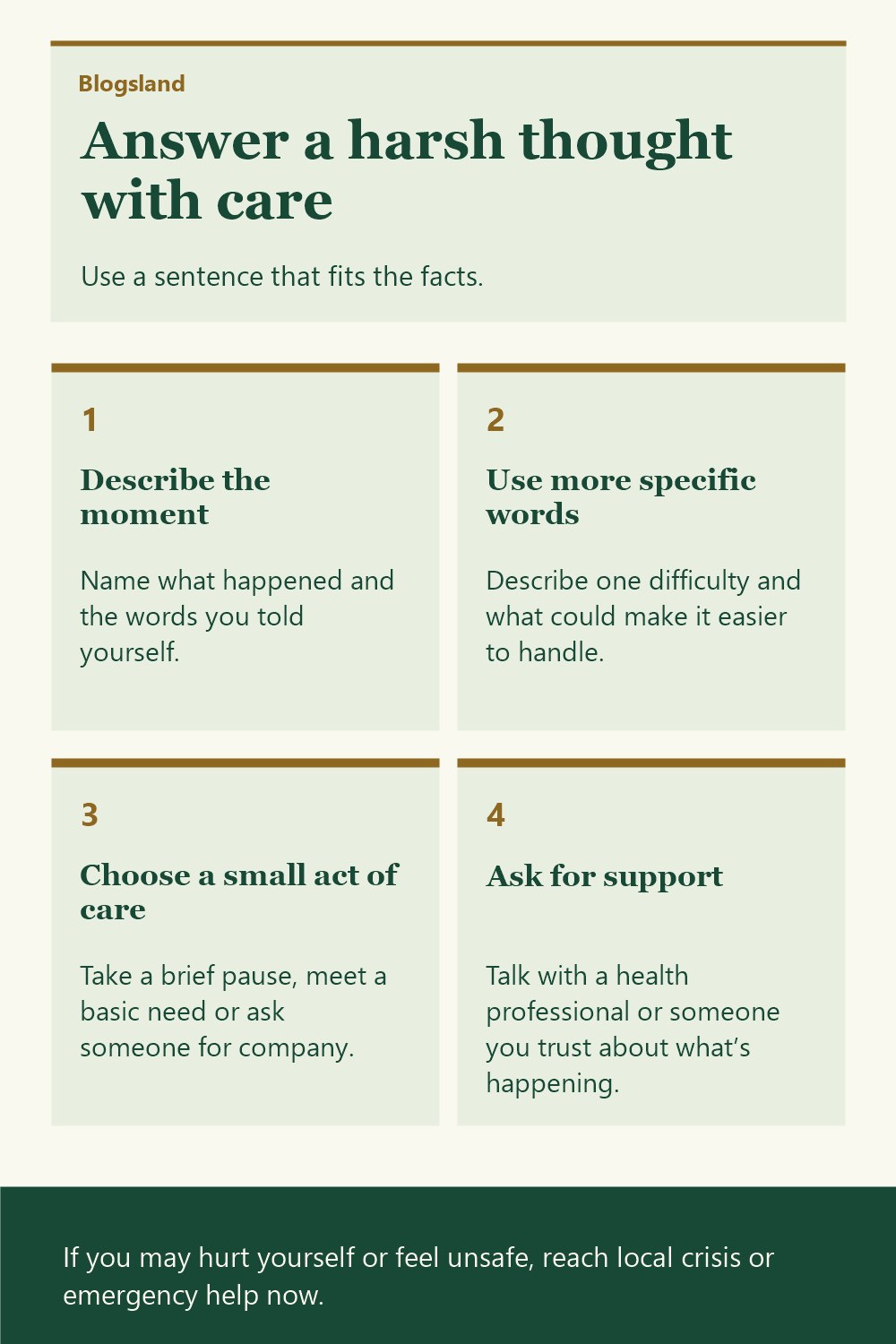
Read the infographic in text
Answer a harsh thought with care Use a sentence that fits the facts.
- Describe the moment Name what happened and the words you told yourself.
- Use more specific words Describe one difficulty and what could make it easier to handle.
- Choose a small act of care Take a brief pause, meet a basic need or ask someone for company.
- Ask for support Talk with a health professional or someone you trust about what’s happening.
If you may hurt yourself or feel unsafe, reach local crisis or emergency help now.